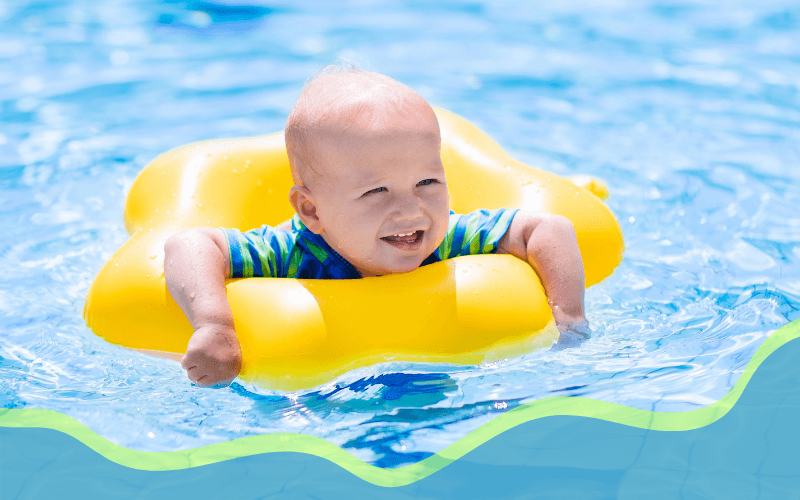
My Baby Swims is a specialized swim school located in San Diego that uses the ISR method. The ISR method is a survival swim program designed to teach infants and young children critical self-rescue skills that enhance their ability to respond to aquatic emergencies. Despite ISR’s proven success, several myths and misconceptions persist. Here, we aim to debunk these myths and provide a clearer understanding of what ISR truly offers.
Myth 1: ISR Is Too Intense for Babies
Fact: ISR Lessons Are Safe, Effective, and Developmentally Appropriate
ISR provides a safe and developmentally appropriate learning experience to each child. Prior to the first lesson, the child’s medical and developmental history is a mandatory part of the ISR national registration process, all of which is held strictly confidential. In addition, each lesson is designed to be brief (10 minutes or less) to reduce the likelihood of physical and mental fatigue. The safety, comfort, and overall well-being of each child is paramount and designed to meet their specific needs, ability, and pace. ISR instructors are training to observe and adjust to each child.
Myth 2: ISR Lessons Are Traumatic
Fact: ISR Lessons Are Life-Saving and Use Supportive Techniques
It is important to acknowledge that the ISR method is dedicated to teaching young children life-saving skills to prevent pediatric drownings. It is common and normal for children to cry and fuss, especially in a new environment, with new people, and learning to perform a skill that they have never done before. Learning new skills can be daunting; however, My Baby Swims prioritizes building connection, trust, and positivity with each of our students to help them feel safe with us and in the water. Throughout lessons, we see that competence leads to confidence. Once a child learns the skills, they also learn to love swimming and playing in the water. Oftentimes, once skilled, our students will cry when they leave the pool.
Myth 3: ISR Skills Replace Parental Supervision
Fact: ISR Supplements, Not Replaces, Vigilant Supervision
It is a dangerous myth that once a child has completed ISR training, they no longer need close supervision around water. Although ISR students learn valuable aquatic self-rescue skills, vigilant supervision is the most critical layer of water protection and safety.
Myth 4: ISR Is Only for Children Who Live Near Water
Fact: ISR Benefits All Children, Regardless of Proximity to Water
According to the CDC, drowning is the leading cause of accidental death among infants and young children between the ages of 1-4. Accidental water exposure can occur in various settings, including pools, hot tubs, bathtubs, buckets, and even toilets. While ISR lessons are beneficial for families who spend a lot of time around the water, the self-rescue skills learned are valuable and can be lifesaving in any water-related situation.
Myth 5: ISR Is Expensive and Inaccessible
Fact: The Value of ISR Far Outweighs the Cost
At first glance, the initial cost of the ISR program may seem more expensive than traditional swimming lessons. However, ISR lessons are often less expensive when you consider the difference in individualized instruction time and program duration. The ISR program offers five lessons per week for six weeks, while traditional swim lessons offer one lesson per week with on-going enrollment. The value and consistency of teaching children self-rescue skills through ISR, which can potentially save their lives, far outweighs the expense.
Myth 6: ISR Teaches the Competitive Swimming Strokes
Fact: ISR Focuses on Self-Rescue, Not the Competitive Swimming Strokes
ISR focuses strictly on equipping infants and young children with the ability to survive if they ever fall into the water, such as the swim float swim sequence back to the wall, and rolling on their back to float and breathe.
ISR skills do form a strong aquatic foundation and appreciation of the water that can lead to later stroke development. Here at My Baby Swims, we do offer stroke introduction lessons for older swimmers who are ready to learn and develop the competitive stroke techniques. However, it is important to note, the MBS stroke introduction lessons are not a part of the survival ISR program.
Leave a Reply
You must be logged in to post a comment.