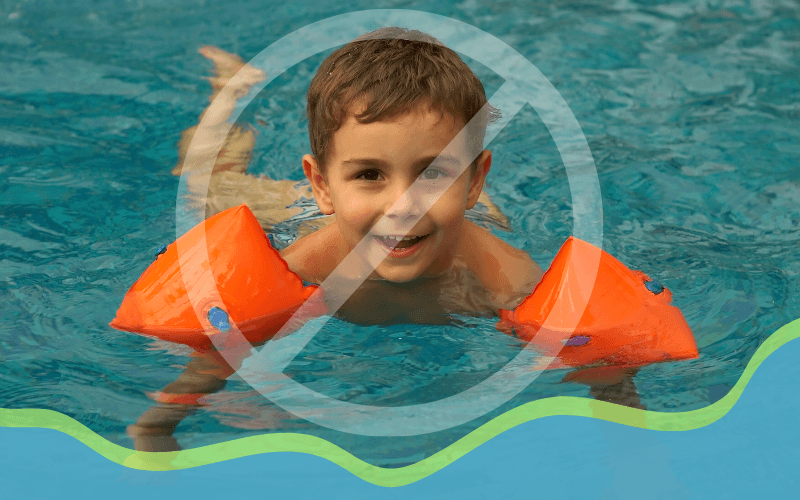
When teaching young children to swim, safety and confidence are paramount. Swim floaties and other floating devices are popular tools that parents often use to help their children feel secure in the water. However, using a flotation device has many disadvantages and creates a false sense of security. Here’s a closer look at the cons of using swim floaties that will help you make an informed decision for your child’s swimming journey.
The Dangers and Cons of Swim Floaties, Water Wings, and Puddle Jumpers
1. False Sense of Security
Relying on floaties creates a false sense of security, buoyancy, and dependency. Not only may the child become overly confident in their swimming abilities, but they become accustomed to the extra support. When a child swims with floaties, they also think they can swim without them, which can lead to a child going into the water on their own and believing they will float to the surface for a breath. They will not.
2. Hindrance to Proper Technique and Body Posture
Floaties impede the development of proper and effective swimming techniques and posture. They restrict arm movement and put the child in a vertical posture. Swimming vertically leads to sinking, panic, and an increased risk of drowning.
3. Risk of Deflation
Some floaties can puncture or deflate, leading to a sudden loss of buoyancy. This can be hazardous if it happens when the child is in deep water.
Floating Device Alternatives
1. Supervision
Constant supervision is the most effective and critical layer of water protection and safety. It is important that your child is never left unattended around the water. Ensure that you or a responsible adult is always watching and within arm’s reach of your infant or young child when they are in or near the pool.
2. Swim Lessons
Enroll your child in formal swim lessons, such as the ISR program offered at My Baby Swims. Our lessons focus on teaching critical self-rescue skills and proper swimming postures. Remember self-rescue swim lessons are not a substitute for constant supervision.
Use Life Jackets During Open Water Swimming
It is important to recognize that swimming in natural bodies of water such as oceans, lakes, and rivers is very different from swimming in a pool. Properly fitted and Coast Guard approved life jackets should always be worn on boats and around any source of open water.
Leave a Reply
You must be logged in to post a comment.