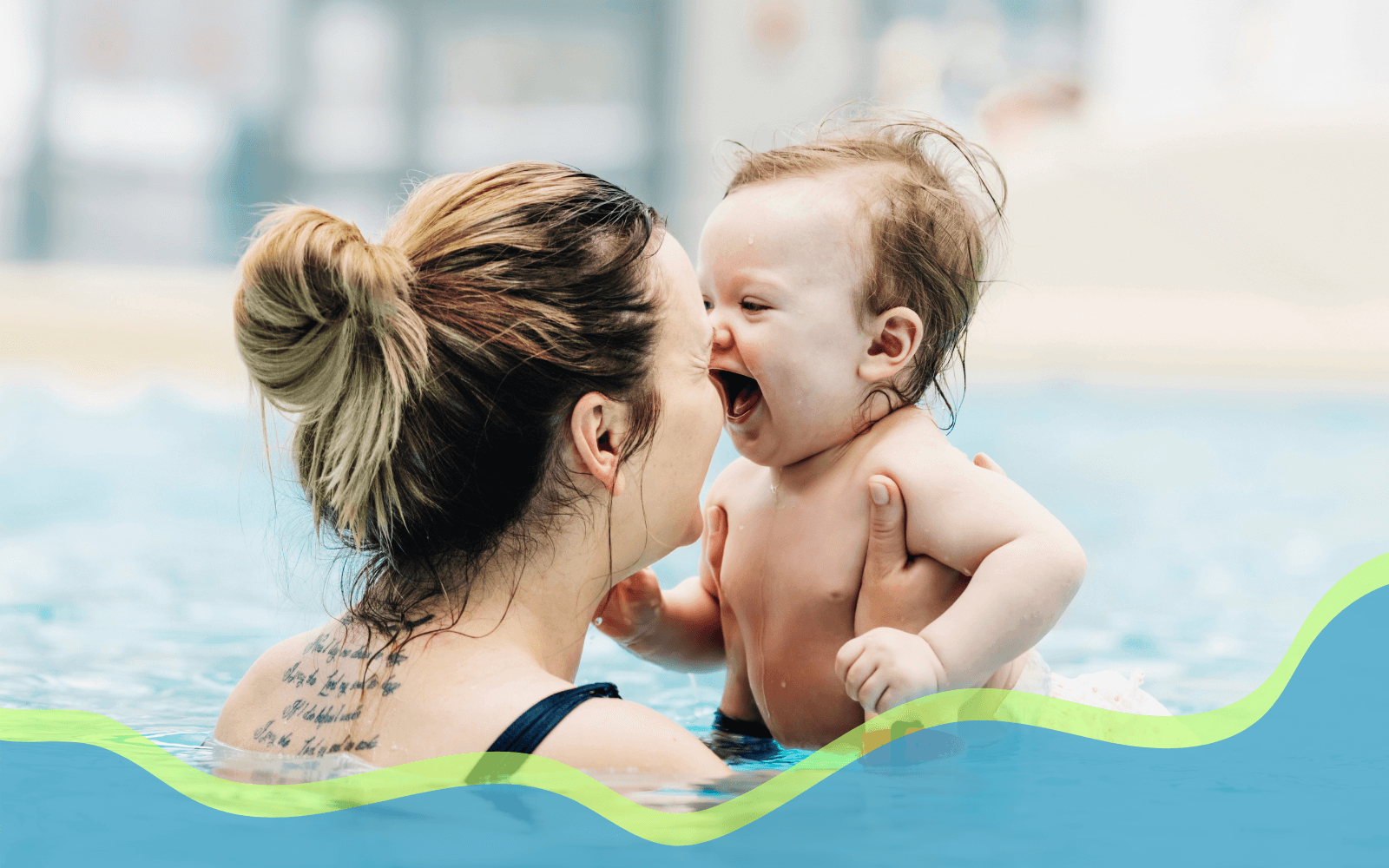
Bringing your child into a pool for the first time is a significant milestone that often leads to a mix of excitement and anxiety. On one hand, you want to share a new experience with your child. But on the other hand, you’re worried about things like water safety, physical development, or potential illnesses. These concerns are valid and shared by many families as they navigate early parenthood.
So, you are likely wondering, how old does my baby have to be before they can safely go in the water or start swimming lessons? Most pediatricians give the “green light” for babies to start swimming at 6 months.
This age is a common milestone because the baby has typically developed better head and core control. Additionally, their immune systems have matured enough to handle shared pool environments, as they are better at regulating their own body temperature.
With that said, pool exposure alone will not develop your child’s abilities to float and swim. Let’s take a look at the two most common types of swimming lessons and see how they differ.
The Two Main Types of Swimming Lessons for Children
When choosing how to introduce your baby to the water, it is helpful to compare the two most common methods. While both get your child in the pool, their goals and results are very different.
The following table provides a quick look at how traditional swim classes compare to the Infant Swim Resource (ISR) program.
| Feature | Parent-Child Classes (Traditional) | Infant Swim Resource (ISR) |
| Primary Goal | Comfort and bonding | Self-rescue and floating |
| Format | Weekly group sessions | Intensive daily 1-on-1 |
| Instruction | Parent holds the baby | Specialist-led instruction |
| Key Result | Early water exposure | Independent survival skills |
Parent-Child Classes
Traditional parent-child classes focus on creating a low-stress environment for both the baby and the caregiver. These sessions usually involve group singing, gentle splashing, and playing with water toys.
The primary goal is to help your baby feel comfortable in the water while you hold them. It serves as a wonderful bonding activity for families who want a relaxed way to spend time together.
However, it is important to understand the limitations of this format.. The primary focuses are fun and water acclimation, not teaching a child how to survive an aquatic emergency
Therefore, relying solely on these classes can sometimes create a false sense of security for parents. Since the parent is always holding the child, the baby will not learn how to handle the water independently.
Drawbacks of traditional classes:
- The parent always holding the baby can prevent the child from learning independent buoyancy.
- Weekly sessions are often too infrequent for a child to retain important muscle memory.
- A focus on play might create a false sense of security for parents regarding water safety.
- Group settings mean the instructor cannot provide constant individual attention to your baby.
Infant Swim Resource (ISR)
For parents who prioritize safety and survival, ISR is the recommended choice. This intensive program is designed to teach babies as young as 6 months how to roll onto their backs and float if they ever fall in. Toddlers and older children learn the “swim-float-swim” sequence to reach safety.
The 1-on-1 approach ensures that a certified specialist is focused entirely on your child’s specific needs and progress. The program consists of 10-minute lessons that are held four to five consecutive days per week over the course of 6 weeks. Over the course of the program, your child will learn essential self-rescue skills and gain confidence and competence in the water.
With ISR being a specialized method, it provides a level of expert-led safety that traditional group sessions simply cannot replicate.
Benefits of the ISR approach:
- Babies as young as six months learn to roll onto their backs and float if they fall into water.
- Toddlers learn a “swim-float-swim” sequence to reach safety effectively.
- One-on-one instruction allows for specialized techniques tailored to your child’s specific needs.
- Lessons prioritize the ability to find air, which is the most critical factor in a water emergency.
- Certified instructors provide a level of expert safety that DIY sessions or group classes cannot match.
Additional Reading – ISR vs. Regular Swim Lessons for Infants
Important Factors to Consider Before Going Swimming
Preparing your baby for the water involves more than just picking a class. You must account for their physical health, the environment of the pool, and the equipment needed for a safe experience. These considerations help manage common parent concerns regarding safety and development.
Pay Attention to Pool Temperature and Time Limits
One of the most critical aspects of infant water safety is monitoring how their bodies react to the temperature.
Because babies are much smaller than adults, they lose body heat up to four times faster. This makes them highly susceptible to chilling, even in water that feels comfortable to you. This means that ideal pool temperatures for infants typically fall between 79°F and 99°F. If you are swimming in a pool at the lower end of this range, it is vital to keep the sessions short, usually between 10 to 15 minutes max.
Parents must stay vigilant for physical signs that a baby is getting too cold. Shivering is the first major warning sign that the baby’s core temperature is dropping. You should also check their extremities and face for any changes in color. If you notice blue or discolored lips, exit the pool immediately, dry the baby off, and begin the warming process.
Signs your baby needs to exit the water:
- Visible shivering or trembling of the limbs.
- Discolored or blue-tinged lips and fingernails.
- Excessive fussiness or sudden lethargy.
- Skin that feels notably cold to the touch after a short period.
Make Sure Your Baby Has the Correct Swimwear
Choosing the right swimwear is about much more than just style, it is a matter of hygiene and safety. Most professional swim schools and public pools require a “double diaper” policy to maintain water quality.
The first layer is a disposable swim diaper, which is designed to hold solids without swelling up like a standard diaper. The second, and most important, layer is a reusable neoprene swim cover. This cover features tight-fitting cuffs around the waist and legs to ensure a secure seal.
This industry standard is designed to prevent fecal matter from entering the pool, which can lead to recreational water illnesses for all swimmers.
Additionally, you must consider sun protection if you are outdoors. Since sunscreen is not recommended for infants under 6 months old, you should opt for a long-sleeve rash guard with a UPF 50+ rating.
Essential swimwear components:
- Disposable Swim Diaper: The base layer intended to trap solid waste.
- Neoprene Cover: A snug-fitting outer layer that prevents leaks.
- UPF 50+ Rash Guard: Provides mechanical sun protection for sensitive skin.
- Wide-Brimmed Hat: Protects the baby’s face and neck from direct UV rays.
Follow Safety Rules In and Out of the Water
Pool safety requires 100% of your attention at all times, with no exceptions for distractions like phones or conversations.
When you are at a pool, you should always remain within arm’s reach of your baby. This “touch supervision” ensures that you can provide immediate intervention if the baby’s face accidentally goes under or if they lose their balance. Even a few seconds of distraction can lead to a dangerous situation, so staying focused is the primary responsibility of the supervising adult.
If you choose to enroll in an ISR class, safety extends to the credentials of the person teaching your child. You should always verify that your instructor is fully certified by the organization. Working with a certified professional provides a level of specialized technique and expert-led safety that DIY sessions simply cannot replicate.
Key safety protocols for parents:
- Stay within arm’s reach of your baby at all times while near water.
- Monitor your child with zero distractions in case immediate intervention is required.
- Confirm your instructor is certified.
Stay Aware of Any Health Risks and Red Flags
The health of your baby and the other children in the pool depends on following strict hygiene protocols.
One of the most important rules is to ensure your baby does not drink the pool water. Even in well-maintained pools, swallowed water can lead to “Recreational Water Illnesses” which often cause symptoms like diarrhea or vomiting.
There are also times when it is best to skip a scheduled swim lesson for the safety of everyone involved. For example, if your child has diarrhea, you must keep them home to avoid the risk of contaminating the entire pool. Similarly, if your baby is dealing with an ear infection, the pressure and moisture of the pool can cause further discomfort or complications.
Being proactive about these red flags helps maintain a healthy environment for all students.
Red flag signs keep your baby out of the pool:
- Keep the baby home if they have diarrhea to prevent the risk of illness to others.
- Skip class if your child is currently suffering from an ear infection.
- Exit the water if you suspect the pool chemicals are not properly balanced.
Take the First Step to Get Your Child Swimming Safely
Determining the right time to begin is a balance between standard medical advice and your child’s individual development. While six months is the general age for pool entry, starting is about the right mix of physical milestones and parent preparedness.
Remember, your choice of class format is a critical part of the safety equation. While a parent-child swim class is a fun bonding activity, it doesn’t provide the same level of safety and training of an ISR program. Working with a certified ISR instructor ensures your child learns survival swimming techniques that casual sessions cannot replicate.
At My Baby Swims, we have two certified ISR providers who can help your child take the first step in their swimming journey. Our goal is to provide the highest level of water safety training to equip your baby with essential self-rescue skills.
If you’re ready to get started, contact us now and reserve your child’s spot in an upcoming class.
Leave a Reply
You must be logged in to post a comment.